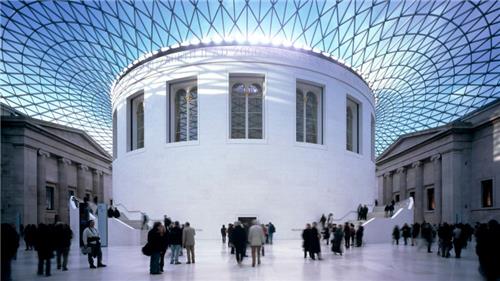
The British Museum

Introduction

The British Museum is a must for anyone visiting the city and has a minimal concern for history, archeology and art.

Best antique objects are exposed is this great museum.
image

Description

In stylish Russell Street , is one of the most famous museums in the world, thanks to its impressive collection of archaeological fruit of long domination and expansion of the British Empire and plundering in five continents .In any case, this looting has served us to see at a single point and a free countless historical treasures.

The museum was founded in 1753 thanks to the collection of Sir Hans Sloane .

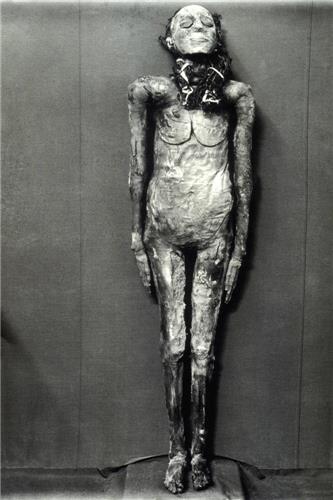
The most famous objects are the Rosetta Stone , sculptures from the Parthenon , the English medieval remains found at Sutton Hoo and Mildenhall, Egyptian mummies and sarcophagi and the famous Portland Vase Roman. Very interesting is also the African collection, possibly the largest in the world.

Information for the visit

The museum is a short walk from Holborn Underground stations, Tottenham Court Road, Russell Square and Goodge St., and the following bus lines: New Oxford Street 7, 8, 19, 22b, 25, 38 , 55, 98, Tottenham Court Road, northbound and Gower Street, southbound, 10, 24, 29, 73, 134, Southampton Row 68, 91, 188.


Open all year with the following schedule:

– From Saturday to Wednesday: 10:00 to 17:30

– Thursday and Friday: 10:00 to 20:30

Closes March 25, 24 and 26 December and 1 January.

Admission is free .
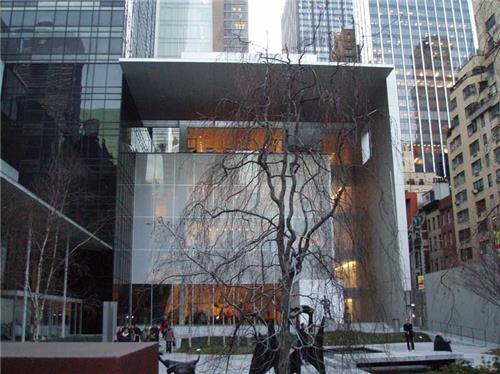
 

Museum of Modern Art in New York

Opened in 1929, MoMA, Museum of Modern Art in New York, has become its own right in the museum of modern art in the world .

image

Some of the most important works on display at the Moma are: Starry Night by Van Gogh, Les Demoiselles d’Avignon by Picasso, The Persistence of Memory by Dali and Miro Dutch Interior .

MOMA is a museum big enough and, if you cross it entirely, it will take at least two hours to visit quickly . If you have little time and do not be passionate about modern art, the plants that are worthwhile are the fourth and fifth , where some of the most famous paintings in history.

Advance tickets

To visit the museum without queuing, the best option is to book the tickets online.


When to visit?

The museum is free on Fridays from 4 to 8 pm , at least you can take advantage of modern art lovers to visit the museum and see the most famous paintings.


Location

53rd Street between 5th and 6th Avenue .


Visiting Hours

Monday, Wednesday, Thursday, Saturday and Sunday from 10:30 to 17:30.

Fridays from 10:30 to 20:00 hours.

Closed Tuesdays.


Price

Adults: $ 25.

Students: $ 14.

Over 65: $ 18.

Children under 16: free.

Free Entry with New York Pass .


Transport

Metro : Avenue/53 Fifth Street , E and V lines Bus : lines M1, M2, M3, M4 and M5.


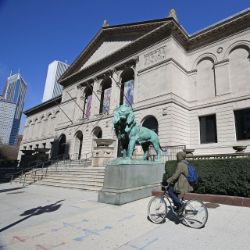
The Art Institute of Chicago

The Art Institute of Chicago

Chicago Art Institute

The Art Institute of Chicago is hands down sure to be a highlight of the trip for any person to the bustling city of blues and thick pizza. The Art Institute of Chicago has a reputation as one of the destinations in the United States premiere of art, a reputation with travelers that art enthusiasts simply must agree. The famous museum is full of art from 5,000 years ago. Besides finery inside, the building exhibits a distinctive touch of Chicago by the elegance and architectural beauty, becoming a work of art in itself.

Although it began as a combination of school-museum, currently the 1893 building is only as a place to display beautiful pieces, attractive and great art. The Art Institute of Chicago is home to such famous works as Vincent Van Gogh “The Room” by Grant Wood “American Gothic” and Pablo Picasso’s “The Old Guitarist”, to name a few.

The first floor of the museum also contains extensive ancient artifacts like a mummy head cover, a large sitting Buddha statue, and a Chinese food container tripod. It also shows the sculpture court, which has several impressive structures above the photo gallery. Always changing and expanding, the Art Institute of Chicago also has a new modern wing. The wing provides enough configuration change of the ancient art, with over eight hundred innovative artworks today. The Art Institute of Chicago also has several distinctive exhibitions, such as the miniature Thorne rooms (a maze recreations tiny house with Georgia, French, American Classic, or basically any architectural style) on the ground floor.

There is also a children’s area where children and adults can have fun tracking medieval brass rubbings, and a special exhibition space in flux in Regenstein Hall. Other features include an abbey Art Institute calm where guests can enjoy food from one of the places to eat at home, and the gift shop. The store is an impressive feat full of reprints of various artworks, like Georgia O’Keefe “Yello Hickory Leaves with Daisy” cup of coffee, or an umbrella with George Seurat’s “A Sunday on La Grande Jatte. – 1884” With all this, the Art Institute of Chicago, just has to be a place in the list of all travelers Chicago hub. The entrance fee is minimal at around $ 12, and the treasures within yourself that involve everyone.

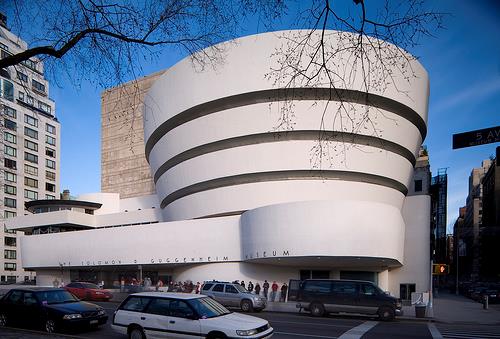
Guggenheim Museum New york

The Guggenheim Museum is located between Fifth Avenue and 89th Street, east of Central Park, and is best known in the “Big Apple” as the Solomon R. Guggenheim Museum.

image

The driver of the Guggenheim Museum Solomon R. was Guggenheim, which names the museum, who was a Swiss-born Jewish billionaire who, after meeting in 1927 to Baroness Hilla Rebay von Ehrenwiesen, was completely infected by his passion for abstract art. This led him to gradually acquire works throughout the world, to be the largest collection in the United States, which they called Non-Objective.

To promote his collection created the Foundation Solomon R. Guggenheim and the Museum of Non-Objective Painting on Calle 54. But this place was not big enough, so in 1943 he commissioned the design of the final Guggenheim Museum by Frank Lloyd Wright.

For the construction of the Guggenheim Museum , Wright was inspired by a ziggurat temple pyramid of ancient Mesopotamia, but gave a form of inverted conch. Inside there is a single gallery of 800 meters ascending spiral that goes through a spiral ramp. It is basically built with precast concrete blocks, that inside are painted white to highlight the works. At the top of the Guggenheim Museum a huge skylight, made ​​of glass and steel, provides much of the necessary light.

The Guggenheim Museum in New York opened in 1959, having passed both its driver as its architect. Although in the beginning he was involved in the controversial and was rejected by the residents of the Upper East Side, the truth is that today the Guggenheim Museum is one of the most visited in the city, and has a great international recognition.

Among the treasures it houses the Solomon R. Guggenheim Museum are works by Kandinsky, Picasso, Modigliani, Chagall, Matisse, Braque, Miró, Pollock, Van Gogh or magritte, although the building itself is already a work of art.

The Guggenheim Museum and Solomon R. Guggenheim Museum , located in the 1071 Fifth Avenue (at 89th Street). Its time to visit is from Sunday to Wednesday from 10:00 to 18:00, closed on Fridays at 17:45 and Saturdays at 19:45. Closed on Thursday, Thanksgiving Day and Christmas Day.

The price or rate entries Guggenheim Museum is $ 18, for students aged 65 and older will be $ 15 and under 12 and members are free.


Louvre Museum in Paris

Opened in the late eighteenth century, the Louvre Museum is the largest museum in France and the most visited in the world . Currently receives over eight million visitors each year.

image

Formed from the collections of the French monarchy and the plundering carried out during the Napoleonic Empire, the Louvre Museum opened in 1793 showing a new model of museum, which passed from the hands of the ruling classes to the enjoyment of the general public .

 Building architecture

The Louvre Museum is housed in the Louvre Palace , a XII century fortress was enlarged and renovated several times. Before it became a museum, some monarchs Charles V and Philip II used the palace as a royal residence in which accumulated their art collections .

Following the move of the royal residence at Versailles Palace , the impressive building of 160,000 square feet would begin its transformation into one of the most important museums in the world.

In 1989 he built a pyramid of glass breaking the monotony of the big gray blocks of the museum, which now serves as a gateway.

The Louvre’s collection includes nearly 300,000 pre-1948 works, of which approximately 35,000 are exposed . The vast collection is organized thematically into different departments: Oriental Antiquities, Egyptian, Greek, Roman and Etruscan history of the Louvre and Medieval Louvre, painting, sculpture, art, graphic and art of Islam.

Among the most important paintings of the museum is worth noting the following:

La Gioconda of Leonardo da Vinci.

Liberty Leading the People by Delacroix.

The Wedding at Cana by Veronese.


Among the sculptures the most outstanding works are:

The Venus de Milo of Ancient Greece .

The seated scribe of Ancient Egypt .

The Winged Victory of Samothrace Hellenistic period of ancient Greece.


The Louvre is huge and art lovers crossing it could be several days . To get an overview and see the most outstanding works, you need to spend at least a full morning to tour the museum.

While the Louvre is very important worldwide, maybe for people who are not too interested in art ever become too boring place because of its huge dimensions , in addition to the heat and the crowds .


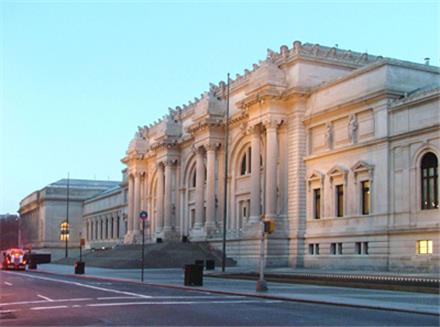
Metropolitan Museum of Art New York

(Metropolitan Museum of Art, or just Met) is the second most visited museum in the world behind the Louvre Museum in Paris .

image

The museum was opened in February 1872 when Robert Lee Jenkins donated his private collection. Since then he has been increasing his collection to the over two million objects .

The most important objects are the Metropolitan Museum treasures of classical culture and the paintings of artists such as Monet, Cezanne or Rembrandt .

Among the more unusual exhibits is the Egyptian area, which is exposed beautifully reconstructed Temple of Dendur . This temple was a gift from Egypt for help in saving Abu Simbel .

Although the Metropolitan Museum is our favorite art museum in New York, sometimes do not have all the time to stop at each of your jewelry and you have to be selective.

If you have little time, the most interesting are the Roman and Egyptian as well as pictures of the second floor.


Location

82nd Street to 5th Avenue .


Visiting Hours

From Tuesday to Sunday from 9:30 to 17:30 pm, Friday and Saturday until 21:00.

Closed: every Monday, the day of Thanksgiving, Christmas and New Year.


Price

Adults: $ 25.

Students: $ 12.

Over 65: $ 17.

Children 12 and under: free.

Free with New York Pass .


Transport

Subway : 86th Street , lines 4, 5 and 6. Bus : lines M1, M2, M3 and M4.


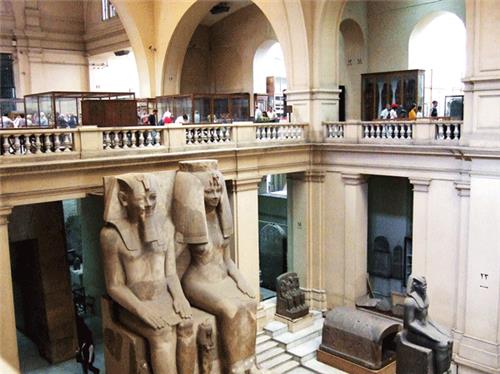
Cairo Museum Egypt

The Egyptian Museum in Cairo is one of the most fantastic museums worldwide. It is a large building where they display the treasures of ancient Egyptian history, giving us the wonderful evidence of mental ability and artistic skill of the ancient Egyptian Man. In fact, before the arrival of the French campaign, led by the famous general Napoleon Bonaparte to Egypt in 1798, the ancient history of Egypt for centuries was almost unknown and full of a lot of confusion and ambiguity.

imageThe French expedition brought more than 165 scholars and scientists in all specialties to study all aspects of Egyptian life, geography, zoology, geology, history, religion, traditions, laws etc. Those scientists showed great desire and enthusiasm to study the entire Egyptian, especially history and ancient monuments. Undoubtedly, the charm and grandeur of these monuments attracted many of them to go almost all regions of Egyptian territory especially in Upper Egypt. The ancient Egyptian monuments were the largest field of study and research for some of these historians and scholars. A few years later came the work of French painter and historian Vivian Dinon who walked enchanted by the wonders especially in Upper Egypt-Egypt, and finally his work resulted in a valuable book entitled “Travel to the Lower and Upper Egypt” published in Paris in 1803.
Also thanks to other French scholars that came with the French expedition that made ​​a great work that encompasses all aspects of life in Egypt of the eighteenth century, publishing his famous book titled, “del Descripcione ‘Egypte” which contains nine volumes of investigations and eleven paintings and illustrations. A few years later, a historical episode normal, guided to a great discovery; deciphering the secrets of Ancient Egyptian history. The stumbling upon a black stone known as the “Rosetta Stone” resulted, therefore, the deciphering of the ancient Egyptian language, a critical event in the history of mankind, and so the scriptures engraved on the walls of temples and tombs gave us great data history, civilization, and religious art in ancient Egypt.   During the nineteenth century began to appear in Europe in general and France in particular a new science called “Egyptology” which led to a fervour among scholars of Europe. and yet, historians, archaeologists, adventurers and treasure hunters and migratory came to Egypt enchanted by its history and culture, began excavating sites in different territory, and obviously some of them lacked the necessary scientific honesty, so there were thefts monuments and objects and immediately emerged a large market of Egyptian Antiquities in Europe, and while there was that time of the nineteenth century the true value of heritage monuments by the native Egyptians.

Neither the government nor the people knew the value of these authentic objects findings and wonderful antiques. and as there was no control over this sector cultural antiquities and Egyptians artifacts were subject to theft, trafficking, smuggling and careless neglect for nearly 50 years until the end of the reign of Governor Mohamad Ali (1805-1849), the modernization of Egypt, who sent conserve monuments and objects discovered in a building within the Citadel of Saladin in Cairo, prohibiting the trafficking of monuments outside the country. imageThanks to Mariette Pacha (1821-1881) precurso the French Egyptologist who established the Egyptian Antiquities Service of first. Mariette in 1857 founded the first museum in the neighbourhood of true “Bulaq” in Cairo. It was, indeed, a small building that consisted of four rooms that were exposed objects and antiquities Egyptian . Soon, this museum was badly affected by the flooding of the river Nile, so the objects were transferred to an annex of a royal palace of the Egyptian Ismael Pacha in the city of Giza. now The Egyptian Museum in Cairo was a fruit of great efforts and good desire to preserve the ancient Egyptian artifacts. It was announced an international competition between European companies in the late nineteenth century to build a museum, and won the competition a company from Belgium, so the design of the facade of the museum, unfortunately, is not Egyptian, but was decorated in the style Greco-Roman.
The design of the museum was done by the French architect Marcel Dourgnon according to the neoclassical model. In 1897 the construction began and ended in 1901, but only the 15 November 1902 the museum was officially opened during the reign of the governor of Egypt Abass Helmi (1892-1914). Egyptian Museum now stands in the square doTahrir (centre of Cairo) near the east bank of the Nile (the corniche). It is a building of immense red colour with a large outdoor patio. The museum has a cafeteria and a book store selling gifts, postcards, slides, maps, guides and history books and Egyptian art. courtyard in the museum, across the internal portal there are three flags, the first is the National Flag, the second represents the Ministry of Culture, and the third belongs to the Supreme Council of Egyptian Antiquities. There, at the top of the facade falls two dates, the first is 1897, which refers to the date of commencement of construction works, while the second is 1901, indicates the end of the works, but the museum was inaugurated in 1902. There are also two initial letters to the right and to the left of the name aldo governor who ruled Egypt from 1892 to 1914, are the letters “A” and “H” indicate that successively named Abbas Helmi. At the center of the facade lies if the head of the goddess important according to ancient Egyptian beliefs, the goddess Hathor (Ht-Hr) who was considered one of the most famous and ancient Egyptian goddesses. She was the goddess who nursed the god Horus as a baby during the absence of his mother Isis acontecimenetos according to the legend of Osiris.

Hathor was the goddess of love, joy, music and motherhood. It was basically figured in three ways: the first as a cow fully, the second with a form híprida woman’s body and head of a cow, and the third way is a woman but with two cow horns on their heads and solar disk between them. On the facade, is the head of Hathor, is represented with the face of a woman, two horns with the solar disk. To both sides, right and left is a representção Goddess Isis celebrate, the wife of Osiris and mother of Horus. Isis was imageone of the fundamental divinities who played a large role in Ancient Egyptian Theology. Isis was the goddess of motherhood, loyalty, and magic. Here Isis is a figurative way Greco-Roman and not due to the traditional Egyptian style your wig and your gown also with node that is Roman. Salem addition, the facade was decorated in the Greco-Roman style due to the existence of two Ionic columns, as this type of columns only appeared in the Greco-Roman Period. After all they are some names of ancient Egyptian kings written into medallions. in the garden of the museum, some monuments are scattered here and there, most of them date from the New Kingdom period (1570-1080 a. C approx.). At the west end of the courtyard is a cenotaph, or symbolic tomb built in honor of the memory of the famous figure, the French Egyptologist Mariette Pasha, who was born in 1821 and died in 1881. It is, indeed, a marble cenotaph commemorating this famous figure who came to him the idea of fundção museum that houses and displays the objects found. He wished to be buried in this place, it seems that the cenotaph is only symbolic. The cenotaph is surrounded by busts of famous Egyptologists as one Champollião, Mariette, Selim Hassan, Labibi Habashi, Kamal Selim etc. At the centre of the courtyard is a fountain filled with two kinds of plants, the papyrus and lotus. The papyrus was the symbol of Lower Egypt (North), while the lotus was the symbol of Upper Egypt (the south). The papyrus is found in the swamps of the Delta region in northern Egypt. It is a plant that needs lots of water and measures almost 2 m. high. In Ancient Egyptian papyri were used to make writing paper, sandals, etc. and barges. While the lotus was in the South, and there were two species, the blue lotus and white lotus during the Ancient Egyptian Era.

We also know that the Romans introduced a third species from Asia. The lotus flower is the symbol of the resurrection, and beyond papyrus, lotus gave inspiration to architects to decorate ancient columns and capitals. Indeed, the Egyptian Museum in Cairo is one of the great museums in the world in terms of cantidade of exhibits and those who are still deposited, because – according to one estimate, the museum has about 120,000 objects on display, while there are over 100,000 obejectos stored in warehouses. The display of objects is arranged on two floors chronological order, with the direction of correpondendo clock inicindo up from Period Predinástico hence the Archaic Period, from the Old Kingdom, Middle Kingdom, the New Kingdom, the Late Period and ends by early Greek Era in Egypt. The second floor is devoted primarily to display the collection of Tutankhamun, the objects from the tomb of the couple Yoya and Tuya and the Hall of Mummies. To both sides of the front entrance of the museum’s two sphinxes that give the visitor a special impression as if you are entering an Egyptian temple.

Luxor Museum Egypt

The Luxor Museum, located near the Nile River, in the city centre of Luxor (Egypt) account for a few weeks with a new coffin of great historical interest. This piece was discovered two years ago by members of Djehuty Project, involving different experts from the University of Seville and other researchers from all over Spain.image

The casket is a singular piece Iqer the time to which is attached, the beginning of the Middle Kingdom, a hectic time in the history of Egypt, with the country emerging from one of the deepest crises in its history. His style is also very unique: a band of decoration presents a rustic features hieroglyphic text, which we might describe as “naive”. The coloring is otherwise well preserved. Inside the coffin was found the mummy coffin owner, by the name of Iqer (which in Egyptian means “The Great”), with an interesting outfit consisting of bows, arrows, rods and ceramics.

Professor, Department of Ancient History at the University of Seville José Miguel Serrano, a member of the archaeological mission for more than a decade, and co-director of the same, says that it is a part “unique and very hard to find.”

Currently only half a dozen have discovered sarcophagi value similar to that already can be seen at the windows of the most important room of the Museum of Luxor. “We are very proud of this recognition that has given us one of the best museums in Egypt and continue to work because we are sure that there is still much to discover.”


In the past two years, this panel has almost doubled the area of ​​excavation where they found a number of funerary chapels and a deposit of ceramics, also of type funeral, the largest found so far. “This is a clear indication that this area contains interesting elements, and even likely, that we find new graves which would add to the five that we have discovered over the years of excavation,” says Serrano Delgado.

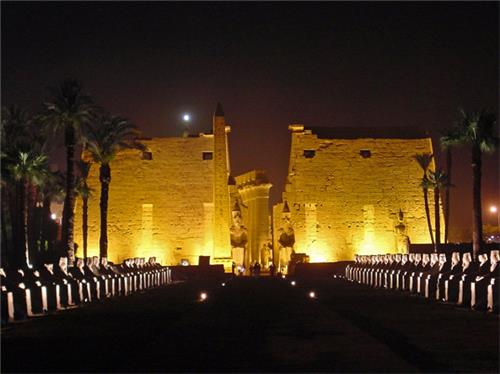
Karnak by Night

The topics that focuses its research are framed within the context of the Egyptian religion, mainly through texts and iconographic repertoires. Holds a research on funerary biographies, plus an interest rate for historiographical issues. In recent years, in line with their participation in the Project Djehuty, is dedicated to the study of New Kingdom funerary rituals

Glass Museum

The History of the Chandelier

Meaning ‘candle holder’, the word chandelier originates from the French word ‘chandelle’ (a fixture attached to the ceiling).  The Chandelier is the most stylish and beautiful form of lighting in the world, making a statement in any room.

The earliest chandelier dates back to over 1000 years ago, to medieval times. Then, chandeliers were generally made of wood, with candles placed on spikes set around them – a far cry from the stunning glass and crystal creations we know and love today.  Wooden lighting fixtures and exposed flames would send the health and safety conscious of us completely mad!

Gradually, rich Europeans re-designed the chandelier and by the early 1900’s crystal chandeliers with candles were all the rage. Crystal chandeliers made from cut glass which caught the light and sparkled brightly adorned the homes of the wealthy and famous, showing off their wealth and social status.

By the mid-19th century, with the popularity of gas lighting, candle chandeliers were converted and by the 1890s, most chandeliers used a combination of gas and electricity.

The largest chandeliers in history

One of the most beautiful chandeliers in the world can be seen in Istanbul. Gifted to the Dolmabahce Palace by Queen Victoria, the chandelier weighs 4.5 tons and has 750 lamps. Other stunning examples of crystal chandeliers can be seen in the ‘Grand Salon’ of the Louvre and the Hall of Mirrors, in the Palace of Versailles, Paris, which contains 17 large and 26 small chandeliers, holding up to 1,000 candles in total, as well as in Prague, where many of the art nouveau buildings contain beautiful examples of chandeliers from the early 1900s.

Today, chandeliers have become glass art in museums across the globe. The Victoria and Albert Museum in London has a stunning example of a blown glass chandelier in the entrance hall. Created by glass artist Dale Chihuly in 2000, the 30ft chandelier is a breathtaking sight for visitors entering the museum.

The Corning Museum of Glass in New York contains more than 40,000 objects made from glass, dating from Egyptian times to the present day. Antique bowls, sculptures and glass portraits sit alongside contemporary sculptures and of course some amazing chandeliers, including the Erbium Chandelier, a vivid pink blown glass chandelier created in 1993 by Dale Chihuly.

Today, chandeliers have become more affordable for everyone. It is still lovely to have a unique and bespoke chandelier hand crafted by local glass artists, but it is also possible to find more budget friendly versions on the internet and in various home furnishing shops.  The chandelier has evolved from its simplest wooden designs to incorporate a wide variety of materials in its more modern reincarnation.  Furthermore, chandelier designs have also been adapted to suit those looking more for a piece of modern art than necessary lighting.  Chandelier designers such as Rocco Borghese have collections that show the stark difference between classic designs and more contemporary .

Modern Chandeliers.

Chandeliers have a rich history and are making a resurgence in modern times.  There is a huge variety of sizes and styles, and of course price right from the affordable ones in larger retailers to custom made chandeliers by boutique experts.

National Museum of the US Army

Long Time Waiting, But the National Museum Of The United States Army Is Almost Here

Image Credit: Wikipedia

The United States if full of museums and memorials for those who have served in the Armed Forces. From the Vietnam Memorial to the U.S. Army Museum of Hawaii, you can find just about anything which memorializes specific conflicts or time periods of U.S. history. Until now, there has not been anything that completely memorializes the entire history of specific branch of government. Scheduled to open in 2015, the National Museum of the United States Army is set to change that.

“I have been to monument dedications throughout the United States, but this is one that I believe I have looked forward to the most, “ said Doug Christiansen, a photographer from Mount Zion, Illinois. “The announcements about what to expect inside the museum have been quiet, which makes the anticipation grown even more.” Christiansen says he plans to travel to the opening ceremony with his wife and three children.

Construction on the museum is set to begin in fall of 2013 and will be located within minute of Washington D.C. at Ft. Belvoir, Virginia. It is planned to be a 155,000 square foot building set on over 40 acres of property. According to the Association of the United States Army, the museum will be accessible without having to enter the base which will make access less complex for visitors. The cost of the project is estimated at approximately $200 Million and the website for the museum is already up and running. When completed, the museum will celebrate the history of the United States Army from 1775 to present, including the men and women who have served both in war and during times of peace.

The project is the brainchild of the Department of the Army, who received fundraising support from the Army Historical Foundation. Visitor expectation is expected to be a little less than 1 Million people annually. With this many people expected to visit, the Department of the Army has spared no expense on the design. They have contracted with two nationally known firms, Christopher Chadbourne & Associates and Skidmore, Owings & Merrill. For those not familiar, Christopher Chadbourne & Associates has a wealth of museum design experience, while Skidmore, Owings & Merrill is the architectural design firm responsible for the design of the Freedom Tower at One World Trade Center.

They have also spared no expense on the pre-opening of the museum. They have contracted with award winning producer and director Kevin Meyer to write, direct, and produce a series of short documentaries for the new museum. The documentaries include voice over narration by Rex Linn and Karri Turner and will be available in the “Experiential Learning Center” on the museum website prior to opening, and then part of the traveling exhibit which will tour the country prior to landing at the museum on opening day. “This is a great experience for me being able to take part in something so special to this country,” stated Meyer. “I have worked in film for many years on many projects, but this one will always be forefront in my mind. My brother and nephews serve in the military and as a filmmaker, this is my way of giving back.” Meyer has produced many well known films including “Perfect Alibi” starring Teri Garr and also wrote the 1997 romantic comedy film “A Smile Like Yours” starring Greg Kinnear and Lauren Holly.

The site for the project was approved from Secretary of the Army John M. McHugh in June 2011. “In presenting the Army’s storied 236-year history, this long-overdue facility will offer the American people a unique opportunity to connect with our Soldiers and better understand and appreciate their many and glorious stories,” said McHugh. He is correct that a project like this is long overdue. To have something that covers the history of the U.S. Army so thoroughly is something that those who have served deserve. It is nice to see it finally coming to fruition.

Garry Reynolds is a decorated veteran of the United States Army and spends his time traveling to many of the U.S.’s most popular travel destinations.